Ever tasted a wedding meal in Tirunelveli and wondered why the curry tastes so comforting?
That light yellow gravy…
The gentle coconut aroma…
The vegetables soaking up all that flavor…
That dish is Tirunelveli Sodhi.
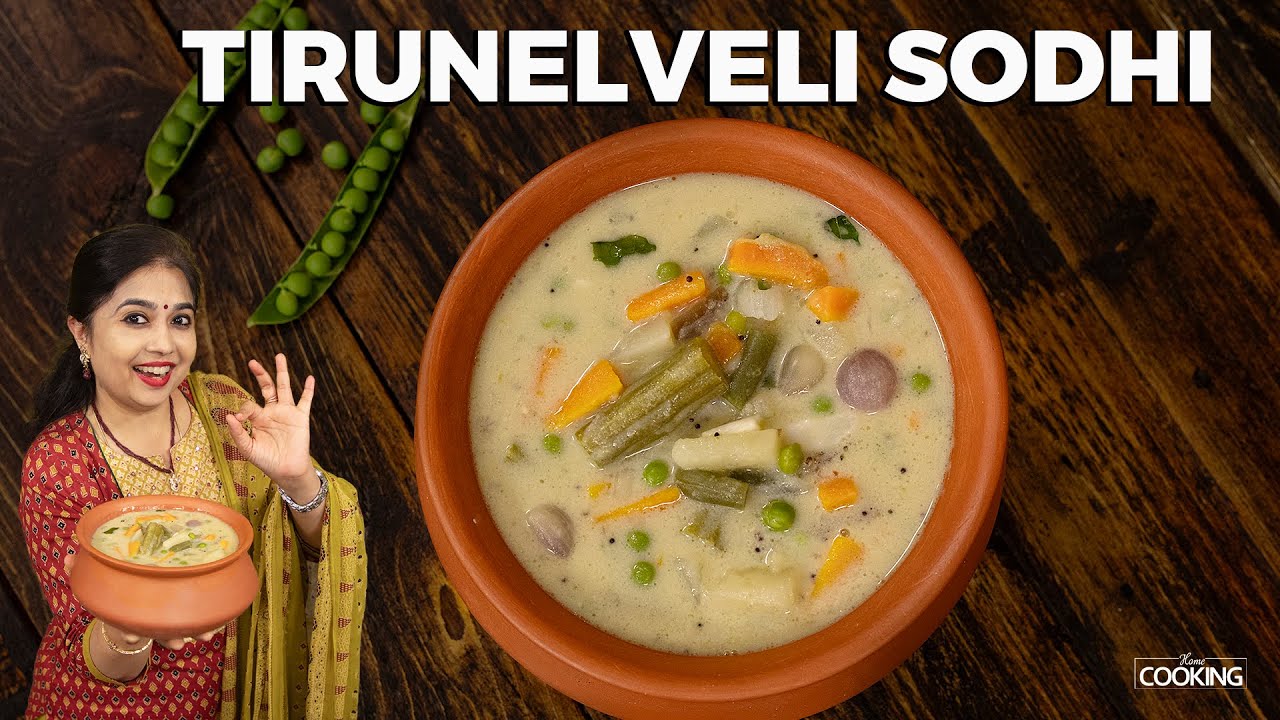
Unlike heavy gravies, sodhi is light, mildly spiced, creamy, and incredibly comforting. It’s the kind of curry that doesn’t overpower your meal, instead, it brings everything together beautifully.
Made with coconut milk, vegetables, and cooked dal, this classic Tamil dish pairs perfectly with soft idiyappam, steamed rice, dosa, or appam.
And the best part?
You can make this traditional Tirunelveli sodhi at home in about 30 minutes.
Let’s break down what makes this dish so special.
What Is Tirunelveli Sodhi?
Sodhi is a traditional coconut milk vegetable stew from Tirunelveli in Tamil Nadu.
It’s most famous for appearing in Tirunelveli wedding feasts, where it is served alongside:
- idiyappam
- steamed rice
- vegetable sides
- pickles
Unlike many South Indian curries, sodhi is very mild in spice. The flavor relies on:
- fresh coconut milk
- shallots
- vegetables
- gentle seasoning
The result is a creamy, soothing curry that balances richer dishes in a traditional meal.
Regional Variations of Sodhi
Like most traditional dishes, sodhi has a few regional twists.
Tirunelveli Wedding Sodhi
The classic version uses:
- coconut milk
- moong dal
- mixed vegetables
- lemon juice finish
Nagercoil Style Sodhi
Often slightly thicker and may include more coconut milk and fewer vegetables.
Simple Home Sodhi
Many households make a quicker version with just:
- potato
- carrot
- peas
Your version follows the classic Tirunelveli-style approach, which is balanced and vegetable-rich.
Why This Dish Is Loved Across Tamil Nadu
There’s a reason sodhi remains a staple in traditional cooking.
It’s light but satisfying
Unlike heavy gravies, sodhi feels comforting without being rich.
Naturally nutritious
The combination of vegetables, dal, and coconut milk offers fiber, protein, and healthy fats.
Perfect for family meals
Because the spice level is mild, it works well for:
- kids
- elders
- large gatherings
Quick everyday cooking
Despite its traditional reputation, sodhi cooks surprisingly fast.
Ingredient Breakdown
Let’s quickly understand why each ingredient matters.
- Coconut Oil: Adds authentic South Indian aroma and richness.
- Shallots: Provide natural sweetness and deeper flavor than regular onions.
- Garlic: Balances the sweetness of coconut milk with gentle warmth.
- Mixed Vegetables: Potato, carrot, beans, peas, drumstick, and brinjal give texture and nutrition.
- Ginger–Green Chilli Paste: Adds mild heat and freshness without overpowering the curry.
- Coconut Milk: The star ingredient that creates the creamy base.
- Cooked Moong Dal: Adds body, protein, and subtle sweetness to the gravy.
- Lemon Juice: Brightens the entire dish and balances the richness.
How Tirunelveli Sodhi Comes Together
Cooking sodhi is actually very simple once you understand the order.
You start by heating coconut oil in a wide kadai. Once the oil warms, add shallots and sliced garlic. As they sauté, the kitchen fills with a sweet, fragrant aroma. This step builds the base flavour of the sodhi.
Next, add the chopped vegetables. The vegetables should be mixed well so they get coated in the oil and aromatics. At this stage, the ginger and green chilli paste goes in, adding gentle heat and depth.
Now comes the most important element: the coconut milk base.
The diluted coconut milk is poured over the vegetables along with salt. Everything simmers gently while the vegetables cook and soften.
Once the vegetables are tender, the cooked dal is added. This thickens the curry slightly while keeping it light and smooth.
After turning off the heat and allowing the mixture to cool slightly, the thick coconut milk is mixed in. This keeps the sodhi creamy and prevents the coconut milk from curdling.
Finally, a quick tempering of mustard seeds and curry leaves in coconut oil is poured over the sodhi, followed by a splash of lemon juice.
That final step lifts the entire dish.
Pro Tip💡 : Never boil the thick coconut milk. Add it only after turning off the stove to keep the sodhi silky and smooth.
What Makes This Recipe Healthy
Tirunelveli sodhi may taste indulgent, but it’s actually quite nutritious.
Key health benefits include:
- Good fiber from vegetables
- Plant protein from moong dal
- Healthy fats from coconut milk
- Vitamins from mixed vegetables
Which makes it a great option for many diets.
What Goes Well With Tirunelveli Sodhi
This dish is extremely versatile.
Serve it with:
- Idiyappam
- Dosa
- Appam
- Steamed rice
For a traditional Tirunelveli meal, it is often served with:
- vegetable poriyal
- pickle
- papadam
How to Serve Sodhi
Serve sodhi hot but not boiling.
For the best experience:
- Pour generously over idiyappam or rice
- Add extra curry leaves for aroma
- Serve with a wedge of lemon on the side
Because the gravy is light, it balances heavier dishes perfectly.
Packing Sodhi for Lunch
Yes , sodhi packs surprisingly well.
Tips for lunch boxes:
- Store in a leak-proof container
- Pack idiyappam separately
- Add lemon juice only after reheating if possible
The flavor actually deepens slightly after resting.
Party or Bulk Preparation Tips
Cooking for guests?
Here’s how to scale sodhi easily:
- Chop vegetables earlier
- Cook dal in advance
- Extract coconut milk beforehand
- Finish the dish fresh before serving
Because sodhi cooks quickly, it’s excellent for large family meals.
How to Store Tirunelveli Sodhi
Sodhi stores well in the refrigerator.
Refrigeration
- Store in airtight container
- Keeps fresh for 2 days
Freezing
Freezing is not recommended because coconut milk may separate.
How to Reheat Sodhi
Reheat gently on the stove over low heat.
If the gravy thickens:
- Add a splash of warm water
- Stir gently
Avoid high heat to prevent splitting.
Substitutions You Can Try
If certain ingredients aren’t available, these swaps work well.
- Replace moong dal with toor dal (small quantity)
- Use store-bought coconut milk if fresh coconut isn’t available
- Skip brinjal if you prefer
The dish remains delicious even with small variations.
Common Mistakes to Avoid
Even a simple dish like sodhi can go wrong if a few things are overlooked.
- Boiling thick coconut milk: This can cause curdling and split the gravy.
- Adding lemon juice too early: Always add it at the end.
- Overcooking vegetables: Vegetables should stay slightly firm.
- Using too much spice: Sodhi is meant to be mild and delicate.
Other Related Recipes You Might Like
- Mor Kuzhambu – tangy yogurt‑based curry with mild spices
- Vegetable Stew – light coconut milk curry with vegetables
- Avial – mixed vegetables cooked in coconut and yogurt
- Sambar – classic lentil and vegetable gravy
Tirunelveli Sodhi
Description
Tirunelveli Sodhi by Hema Subramanian is a traditional Tamil Nadu coconut milk curry made with vegetables, dal, and mild spices. A comforting dish often served with idiyappam or rice.
Ingredients
To make Tirunelveli Sodhi
For tempering
Instructions
Prep Work
-
Prepare Ginger Chilli Paste
Grind ginger and green chilies together into a smooth paste and keep aside.
-
Cook Dal
Cook moong dal until soft and keep it ready for the sodhi. -
Extract Coconut Milk
Extract thin and thick coconut milk separately and keep both ready. -
Chop Vegetables
Chop potato, carrot, beans, drumstick, and brinjal into medium pieces.
-
Prepare Shallots and Garlic
Peel shallots and slice garlic cloves.
Method
-
Heat Coconut Oil
Heat coconut oil in a wide kadai over medium flame.
-
Saute Shallots and Garlic
Add shallots and sliced garlic and saute briefly until aromatic.
-
Add Vegetables
Add chopped potato, green peas, carrot, beans, drumstick pieces and brinjal. Mix well.
-
Add Spice Paste
Add the ginger green chilli paste and mix it into the vegetables. -
Add Coconut Milk and Salt
Pour the diluted coconut milk, add salt and mix well. Cover and cook for about 10 minutes.
-
Add Cooked Dal
Add the cooked dal and let the mixture simmer gently for about 5 minutes.
-
Add Thick Coconut Milk
Turn off the stove and gently mix in the thick coconut milk once the gravy cools slightly.
-
Prepare Tempering
Heat coconut oil in a small pan and splutter mustard seeds. Add curry leaves.
-
Finish the Sodhi
Pour the tempering over the sodhi and add a few drops of lemon juice. -
Serve
Mix gently and serve the sodhi hot with idiyappam or rice.
Equipment


Affiliate Disclosure: This post contains Amazon affiliate links, i.e., when you buy any product using the links below, we get commissions. but it doesn’t cost you anything extra. If you do purchase any product using the given links, we thank you in advance!
Nutrition Facts
Servings 5
- Amount Per Serving
- Calories 210kcal
- % Daily Value *
- Total Fat 12g19%
- Saturated Fat 9g45%
- Sodium 420mg18%
- Potassium 480mg14%
- Total Carbohydrate 22g8%
- Dietary Fiber 5g20%
- Sugars 5g
- Protein 6g12%
- Vitamin A 3100 IU
- Vitamin C 16 mg
- Calcium 60 mg
- Iron 2.1 mg
- Phosphorus 110 mg
- Magnesium 45 mg
- Zinc 1 mg
* Percent Daily Values are based on a 2,000 calorie diet. Your daily value may be higher or lower depending on your calorie needs.