
The right utensil makes a bigger difference than most people think.
You can have the best kadai in the world, but if you are stirring your dal with a thin spoon that bends under pressure, or flipping your dosa with a spatula that is too narrow, the job gets harder than it needs to be. Good hand tools make everyday cooking easier, faster and a lot more comfortable.
Indian cooking uses your utensils hard. Tempering spices means working quickly in very hot oil. Stirring a thick gravy that is catching at the base takes a firm, flat spatula. Serving sambar from a deep pot needs a ladle with a long enough handle to keep your hand away from the steam. Spreading dosa batter needs a flat turner that moves smoothly without tearing.
Comfort matters too. When you are cooking every day, a handle that is awkward to grip gets tiring fast. A tool that is too heavy strains your wrist. One that is too short puts your hand too close to the heat.
Durability is just as important. Cheap utensils warp, crack or lose their shape quickly. A well made ladle or a solid wooden spoon, looked after properly, will last you years.
This guide covers the cooking utensils every Indian kitchen needs. Spatulas, ladles, serving spoons, flat turners and wooden tools. I have broken it down by type, explained what each one is best for, and included what to look for when you buy.
Types of Cooking Utensils
Spatulas
A spatula is the most reached for tool in an Indian kitchen. You use it to saute onions, stir a masala base, scrape the bottom of a pan when things start to stick, and mix dry vegetable dishes. It handles both wet and dry cooking equally well.
For Indian cooking, you want a spatula that is firm enough to scrape properly and wide enough to stir without splashing. A flat edged spatula gets into the corners of a kadai. One with a slightly angled head makes stirring deep pots easier.
Spatulas come in wood, stainless steel and silicone. Wood is the most traditional and practical for everyday use. Silicone works well with non-stick pans. Stainless steel is durable but not suitable for coated cookware.
Use it for: sauteing vegetables and spices, stirring gravies and dal, scraping the base of pans, mixing dry dishes, cooking on a tawa.
Ladles
A ladle is built for liquid. Curries, sambar, rasam, soups — anything you are scooping and pouring needs a proper ladle. A flat spoon just does not hold enough and makes a mess.
Handle length matters here. Indian cooking involves deep vessels and high heat. A short handled ladle puts your hand too close to steam and hot oil. A long handled one keeps you at a safe distance and gives you much better control.
Stainless steel ladles are the most practical. They do not absorb smell or colour from strong spices, they clean easily and they hold their shape for years. A set with two or three different sizes covers everything from a small tadka pan to a large pot of sambar.
Use it for: serving curries and gravies, scooping sambar and rasam, drizzling oil for tempering, transferring soups, serving biriyani.
Serving Spoons
Serving spoons are wider and flatter than ladles, which makes them better for things that do not pour easily. Rice, thick dal, vegetable dishes, dry snacks — these all need a proper serving spoon to come out neatly.
A good serving spoon lets you plate food cleanly. Rice does not fall apart. A sabzi comes out in one scoop rather than crumbling. Slotted serving spoons are useful when you want to serve solid pieces and leave excess liquid behind.
Stainless steel serving spoons with a slight curve in the bowl are the most versatile. They work with both wet and dry dishes and are easy to wash.
Use it for: serving rice, plating thick dal and sabzi, scooping solids out of a gravy, serving dry snacks and starters.
Turners and Flat Spatulas
A turner is flat, thin and wide. It slides under food rather than stirring it. This is what you reach for when you are flipping a dosa, turning a paratha, lifting a fried cutlet or folding an omelette.
The key is a thin front edge. A thick edge will not get cleanly under a dosa without tearing it. A wide flat head supports the full weight of what you are lifting so it stays in one piece.
For non-stick pans and tawa, silicone or nylon turners protect the coating. For cast iron and stainless steel, a metal turner works perfectly and lasts much longer.
Use it for: flipping dosas, turning parathas and rotis, lifting fried snacks, folding omelettes, flipping uttapam.
A Note on Wooden Tools
Wooden utensils deserve their own mention because they are the backbone of a traditional Indian kitchen and genuinely the most practical choice for a lot of everyday cooking.
Wood does not conduct heat the way metal does, so the handle stays cool even when the spoon end has been sitting in a hot pot. Wooden tools are gentle on cookware and will not scratch non-stick surfaces or damage the seasoning on cast iron. There is no coating to chip or peel, and good solid wood handles strong spices and high heat without any issues.
Traditional Indian kitchens have always used wooden tools for good reason. They were not just the affordable choice. They were the right choice for the way Indian cooking works, with its constant stirring, high heat and strong flavours.
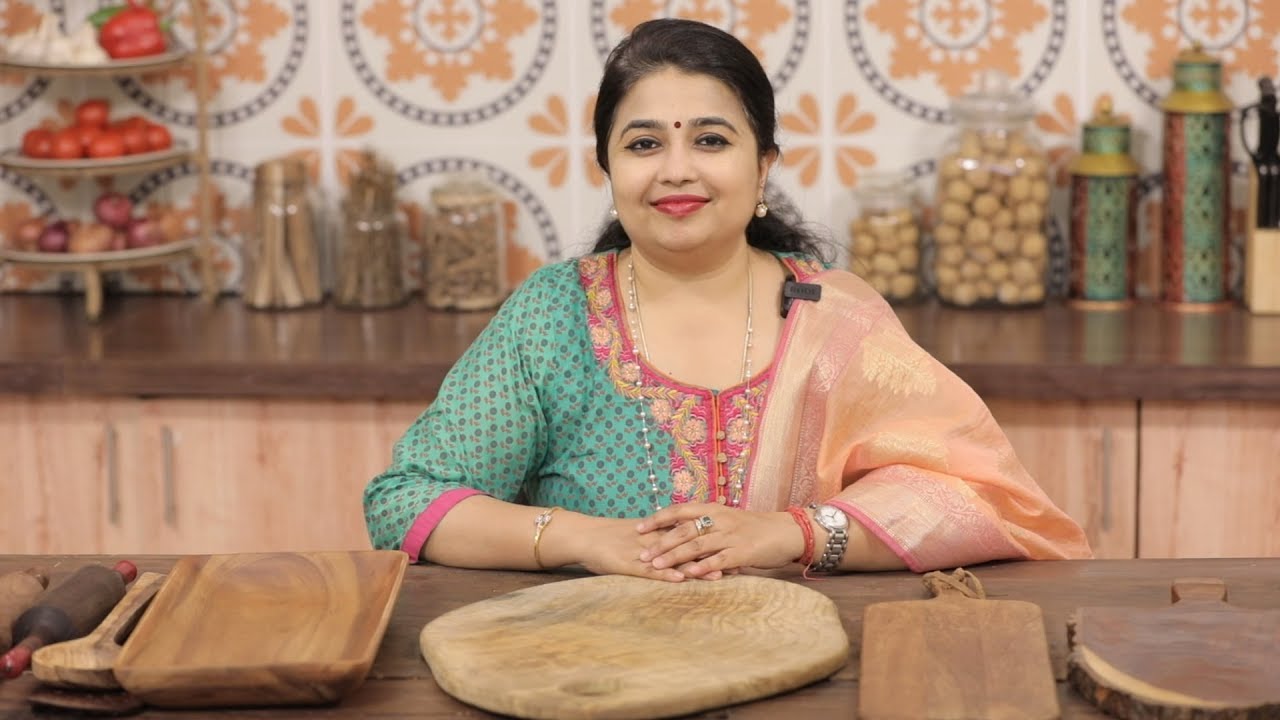
I have put together a video going through the wooden tools I use in my own kitchen and how I use each one while cooking. If you are thinking about adding wooden utensils to your kitchen, watch this first.
Video embed here Caption: Wooden tools we use daily in our kitchen
Recommended Picks
Recipes That Use These Utensils
The best way to understand how your utensils work is to put them to use. Here are some recipes where the right hand tool makes a real difference to how the cooking goes.
If you want to try out a good wooden spatula, start with a simple vegetable stir fry or a dal tadka. Both involve sauteing spices in hot oil and then stirring a thick base, which is exactly what a wooden spatula is built for.
For your ladle, a pot of sambar or a chicken curry will show you everything you need to know. You are building a gravy, tasting as you go, and serving from a deep pot. A long handled ladle makes all three of those things easier.
To get the most out of your flat turner, make dosas. Getting a thin dosa crisp and golden without tearing it is one of those skills that clicks into place once you have the right tool in your hand.
- Browse stir fry and dry sabzi recipes
- Browse gravy and curry recipes
- Browse dosa and tawa recipes
- Browse rice and one pot recipes
Care and Maintenance
Wooden tools
Wash by hand with warm water and a little dish soap. Do not soak them and do not put them in the dishwasher. Both cause the wood to swell and crack over time. After washing, dry immediately with a cloth and leave them out in the open air to finish drying before storing. Every few months, rub a small amount of food safe oil like coconut oil into the wood and leave it to soak overnight. This stops the wood from drying out and cracking.
Stainless steel ladles and serving spoons
These are much simpler. Wash normally, dry fully before storing. If stains build up, a paste of baking soda and water cleans them without scratching.
Silicone and nylon turners
Wash with warm soapy water. Avoid leaving them in contact with very high heat for long periods as this can soften or warp the head over time.
When to replace
Replace wooden tools when they develop deep cracks that cannot be cleaned, or when they start to splinter. Replace any utensil when the head loosens from the handle or when the surface chips or peels.