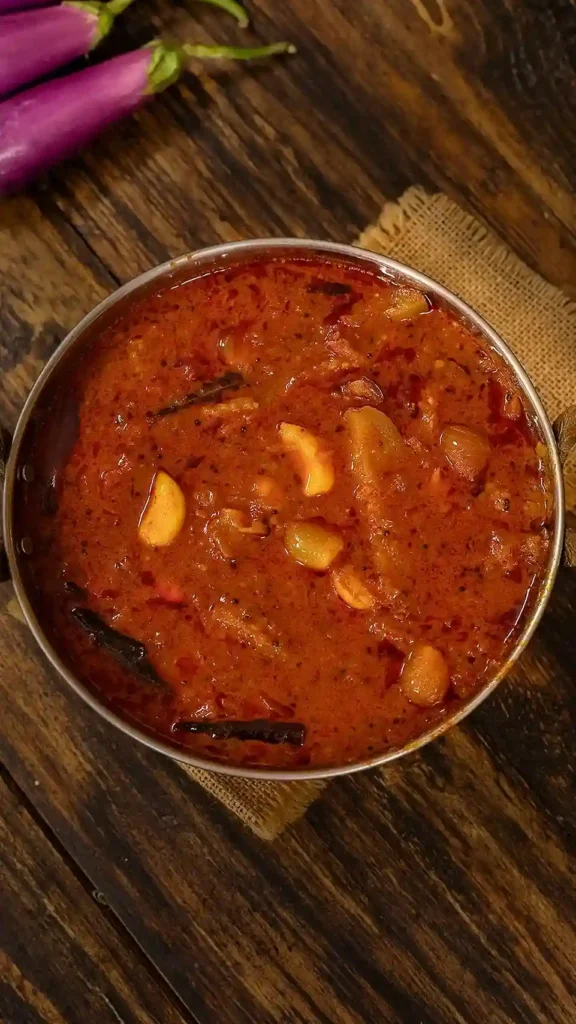

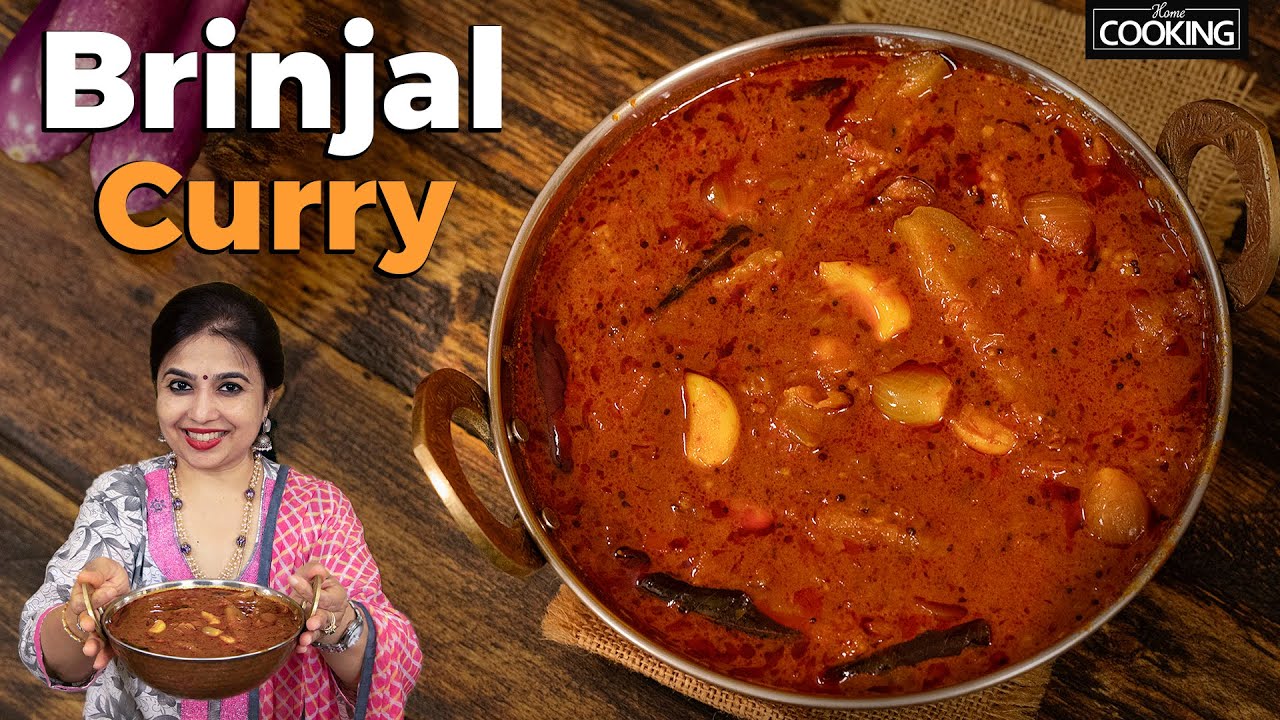
Brinjal Curry is one of those comforting South Indian dishes that transforms simple pantry ingredients into a rich, flavorful meal. Tender pieces of brinjal are simmered in a tangy tamarind-based gravy infused with aromatic spices, shallots, garlic, and curry leaves. The result is a bold, spicy curry that pairs beautifully with steamed rice, dosa, idli, or chapati.
If you’re looking for an authentic South Indian brinjal curry recipe that delivers restaurant-style flavor with homemade goodness, this recipe is sure to become a family favorite. The combination of sambar powder, coriander powder, and tamarind creates a perfectly balanced gravy with spicy, tangy, and slightly sweet notes from jaggery.
Whether you’re preparing a weekday lunch or a traditional South Indian meal, this Brinjal Curry is an easy and satisfying side dish that never disappoints.
What Is Brinjal Curry?
Brinjal Curry, also known as Kathirikai Curry in Tamil, is a classic South Indian gravy made with fresh eggplant, onions, shallots, garlic, tomatoes, tamarind, and aromatic spices. Unlike dry brinjal stir-fries, this version features a flavorful, slightly thick gravy that allows the brinjals to absorb every bit of the delicious masala.
The curry gets its signature taste from the combination of mustard seeds, cumin, fenugreek, curry leaves, and sambar powder, giving it a distinct South Indian character. The addition of tamarind provides a pleasant tanginess, while jaggery balances the flavors beautifully.
History and Origin of Brinjal Curry
Brinjal has been a staple vegetable in South Indian kitchens for centuries and is widely used across Tamil Nadu, Karnataka, Andhra Pradesh, Telangana, and Kerala. Every region has its own variation of brinjal curry, ranging from coconut-based gravies to tamarind-rich kuzhambus.
This style of Brinjal Curry closely resembles the traditional Tamil Nadu preparation, where tamarind, shallots, garlic, and freshly tempered spices come together to create a deeply flavorful gravy. It is commonly served during everyday lunches and festive family meals because of its ability to complement almost every South Indian main course.
Why You’ll Love This Recipe
There are plenty of reasons why this Brinjal Curry deserves a place in your weekly meal rotation.
- Authentic South Indian homemade flavor.
- Rich, spicy, and tangy gravy.
- Perfect balance of heat and sweetness.
- Simple ingredients that are easily available.
- Pairs well with rice, dosa, idli, and chapati.
- Naturally vegan when prepared without ghee.
- Ideal for everyday meals and special occasions.
- Gets even tastier after resting for a few hours.
Health Benefits of Brinjal Curry
Brinjal is not only delicious but also packed with nutrients.
- Rich in dietary fiber that supports healthy digestion.
- Low in calories, making it suitable for balanced diets.
- Contains antioxidants that help protect the body’s cells.
- Garlic and shallots provide natural compounds that support immunity.
- Tamarind contributes minerals and digestive benefits.
- Fenugreek seeds are traditionally valued for supporting digestion.
- Homemade curry contains no preservatives or artificial ingredients.
Ingredient Breakdown
Brinjal
Fresh brinjals become soft and creamy as they cook, absorbing all the flavorful spices and tangy gravy.
Shallots
Shallots add natural sweetness and create a rich texture that makes the curry incredibly flavorful.
Garlic
Whole garlic cloves mellow during cooking and provide a wonderful depth of flavor.
Onion
Finely chopped onions build the savory base of the curry.
Tomato
Tomatoes add freshness, body, and a slight natural acidity.
Tamarind Puree
The heart of the curry, tamarind gives the gravy its signature tangy taste.
Mustard Seeds, Cumin & Fenugreek Seeds
These whole spices release wonderful aromas during tempering and form the foundation of authentic South Indian flavors.
Curry Leaves
Fresh curry leaves bring unmistakable South Indian fragrance and freshness.
Spice Powders
Turmeric, chilli powder, coriander powder, and sambar powder work together to create a rich and aromatic masala.
Jaggery
A small amount of jaggery balances the tanginess of tamarind and enhances the overall flavor without making the curry sweet.
How This Brinjal Curry Comes Together
The recipe begins by preparing a traditional South Indian tempering with mustard seeds, cumin, and fenugreek seeds. Once aromatic, onions, shallots, garlic, and curry leaves are sautéed until they soften and release their natural sweetness.
Tomatoes are then cooked until they become soft before adding the spice powders. The masala is gently cooked until the oil begins to separate, indicating that the spices are well roasted.
Tamarind puree and water are added to form a flavorful gravy. Fresh brinjal pieces are then simmered until perfectly tender, allowing them to absorb all the delicious flavors. Finally, a touch of jaggery balances the tanginess, while fresh curry leaves add the finishing aroma before serving.
The result is a deeply flavorful curry with tender brinjals and a rich, spicy gravy.
Pro Tip 💡 : Choose small, fresh, and firm brinjals with shiny skin for the best texture. Avoid overcooking, as brinjals become very soft quickly. Cooking on medium heat allows the vegetables to absorb the spices while maintaining their shape.
Vegan Swap🌿: This recipe is naturally vegan since it uses oil instead of dairy. Simply ensure your sambar powder contains only plant-based ingredients.
Why This Recipe Works So Well
Every ingredient in this recipe has a purpose.
The shallots and garlic provide sweetness and richness, while the tomatoes create a flavorful base. Tamarind brings vibrant tanginess, and jaggery gently balances the acidity. The combination of mustard seeds, cumin, fenugreek, and curry leaves delivers authentic South Indian aromas, while sambar powder adds complexity and warmth.
Together, they create a curry that tastes even better after the flavors have had time to blend.
What to Serve With Brinjal Curry
This versatile curry pairs beautifully with many dishes.
- Steamed rice
- Idli
- Dosa
- Chapati
- Phulka
- Jeera rice
- Ghee rice
- Curd rice
- Pongal
- Millets
How to Serve
Serve Brinjal Curry piping hot with steamed rice and a drizzle of ghee for a comforting South Indian meal. It also makes an excellent side dish for dosa, chapati, or soft idlis.
Add a serving of papad, pickle, and curd on the side to create a complete traditional lunch.
Lunchbox Tips
Brinjal Curry travels well and tastes even better after a few hours, making it ideal for lunchboxes.
Pack it with steamed rice, chapati, or millet rotis. Allow the curry to cool slightly before sealing the lunchbox to prevent excess moisture.
Party and Meal Prep Tips
This curry is an excellent make-ahead dish because the flavors continue to develop over time.
- Prepare the curry a day in advance.
- Store in the refrigerator overnight.
- Reheat gently before serving.
- Garnish with fresh curry leaves before serving for added freshness.
How to Store
Allow the curry to cool completely before transferring it to an airtight container.
- Refrigerate for up to 3 days.
- Freeze for up to 1 month.
- Thaw overnight in the refrigerator before reheating.
How to Reheat
Reheat the curry over low to medium heat until thoroughly hot. If the gravy has thickened, simply add a little water while reheating and stir gently.
Avoid boiling vigorously, as the brinjals may become too soft.
Variations
- Add drumsticks for extra flavor.
- Include green peas for a different texture.
- Use baby brinjals instead of chopped pieces.
- Add freshly grated coconut for a richer gravy.
- Increase tamarind for a tangier version.
- Make it extra spicy with additional green chillies.
- Finish with coriander leaves for added freshness.
Common Mistakes to Avoid
- Using overripe brinjals that become mushy.
- Skipping the fenugreek seeds, which provide authentic flavor.
- Adding too much tamarind, making the curry overly sour.
- Not cooking the spice powders long enough.
- Overcooking the brinjals until they fall apart.
- Forgetting the jaggery, which balances the flavors.
- Using old curry leaves instead of fresh ones.
Other Related Recipes You Might Like:
- Brinjal Drumstick Curry Kathirikai Kuzhambu – A traditional South Indian brinjal curry cooked with drumsticks in a flavorful tamarind-based gravy.
- Brinjal Lobia Curry – A wholesome curry combining brinjal and black-eyed peas for a nutritious meal.
- Brinjal Tawa Fry – A spicy pan-roasted brinjal recipe that makes a perfect side dish for rice and roti.
- Brinjal Fry – A simple and flavorful brinjal fry with aromatic spices and crispy texture.
- Cauliflower Curry – A comforting vegetable curry with rich masala flavors and a delicious gravy.
- Ridge Gourd Curry – A light and tasty vegetable curry that’s perfect for everyday meals.
- Aloo Baingan Ke Sabji – A classic North Indian curry made with potatoes and brinjal in a flavorful masala.
- Tomato Curry – A tangy and spicy curry recipe that pairs beautifully with rice and chapati.
Brinjal Curry
Description
Brinjal Curry by Hema Subramanian is a delicious and aromatic curry made with tender brinjals, onions, tomatoes, and traditional Indian spices. A perfect side dish for rice, chapati, or dosa.
Ingredients
Instructions
Prep Work
-
Cut brinjal
Wash and cut the brinjals into medium-sized pieces and keep them ready. -
Chop vegetables
Finely chop the onion and tomato. Peel the shallots and garlic. -
Prepare tamarind
Keep the tamarind puree ready before you begin cooking. -
Arrange ingredients
Measure all the spices and keep every ingredient ready.
Method
-
Prepare tempering
Heat the oil in a wide kadai. Add mustard seeds, cumin seeds and fenugreek seeds and sauté.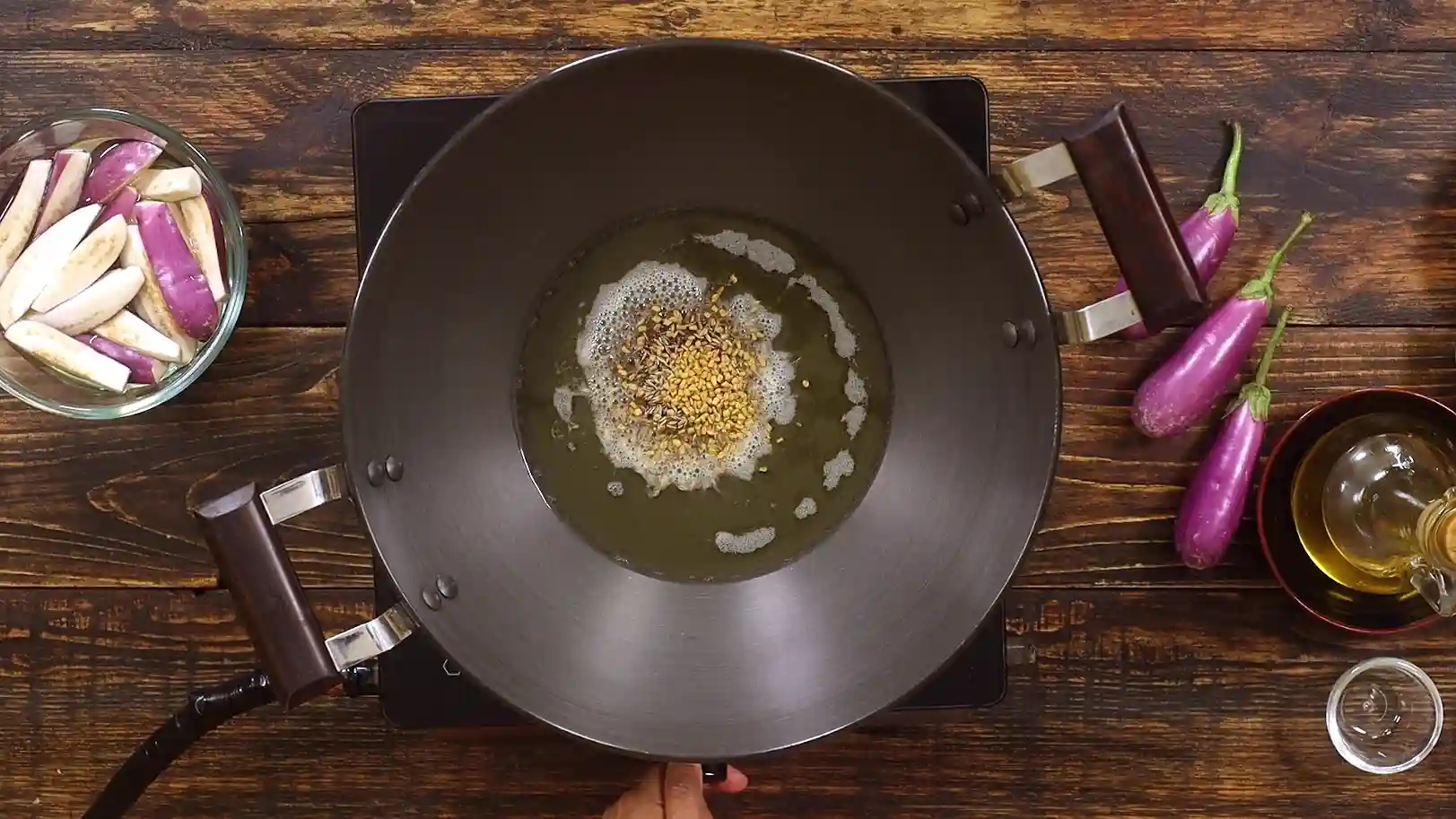
-
Sauté onion
Once the mustard seeds splutter, add the red chillies and finely chopped onion. Sauté until slightly soft. -
Add shallots and garlic
Add the curry leaves, shallots and garlic cloves. Cook until lightly softened.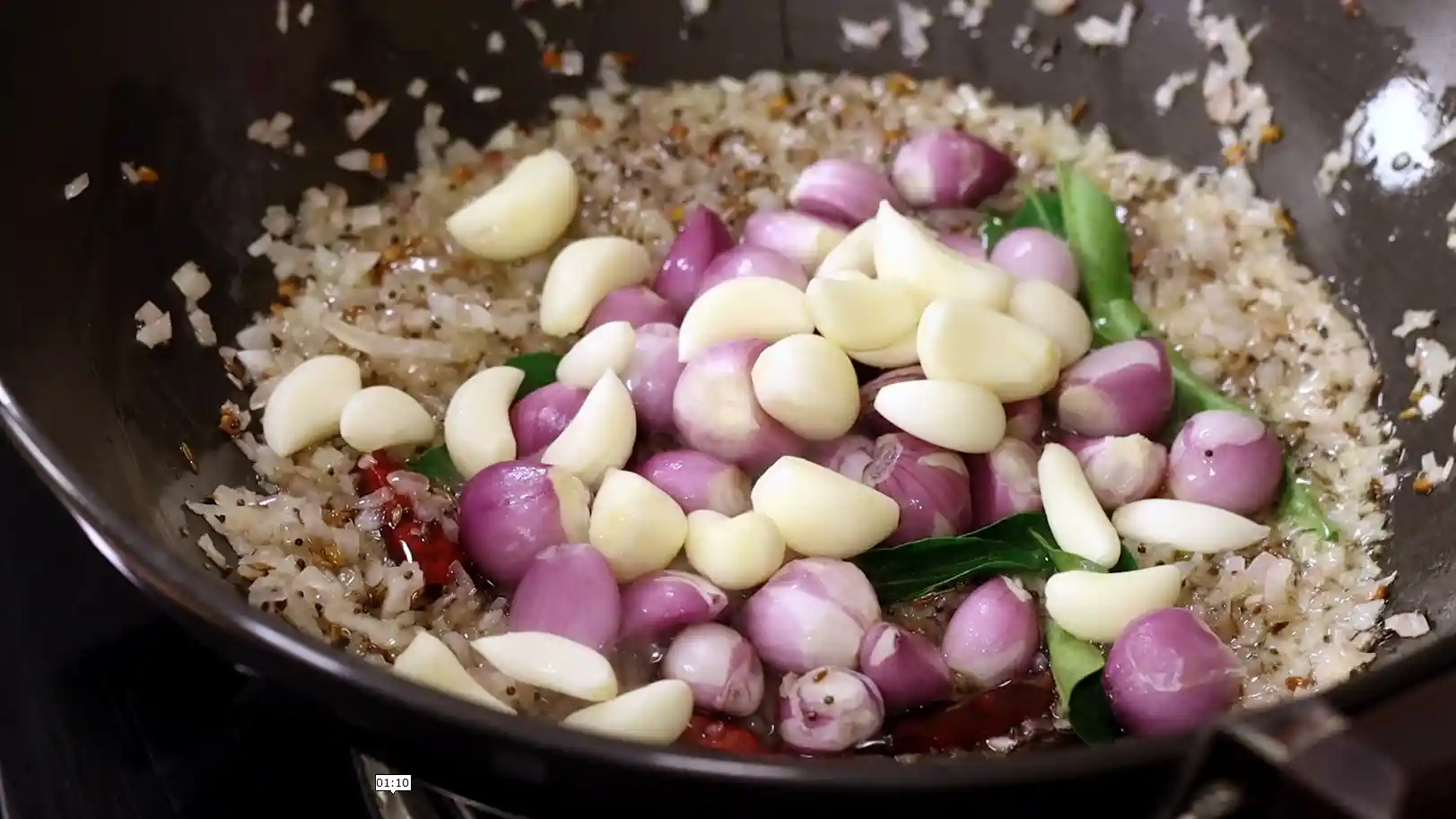
-
Cook tomato
Add the chopped tomato and sauté until slightly mushy.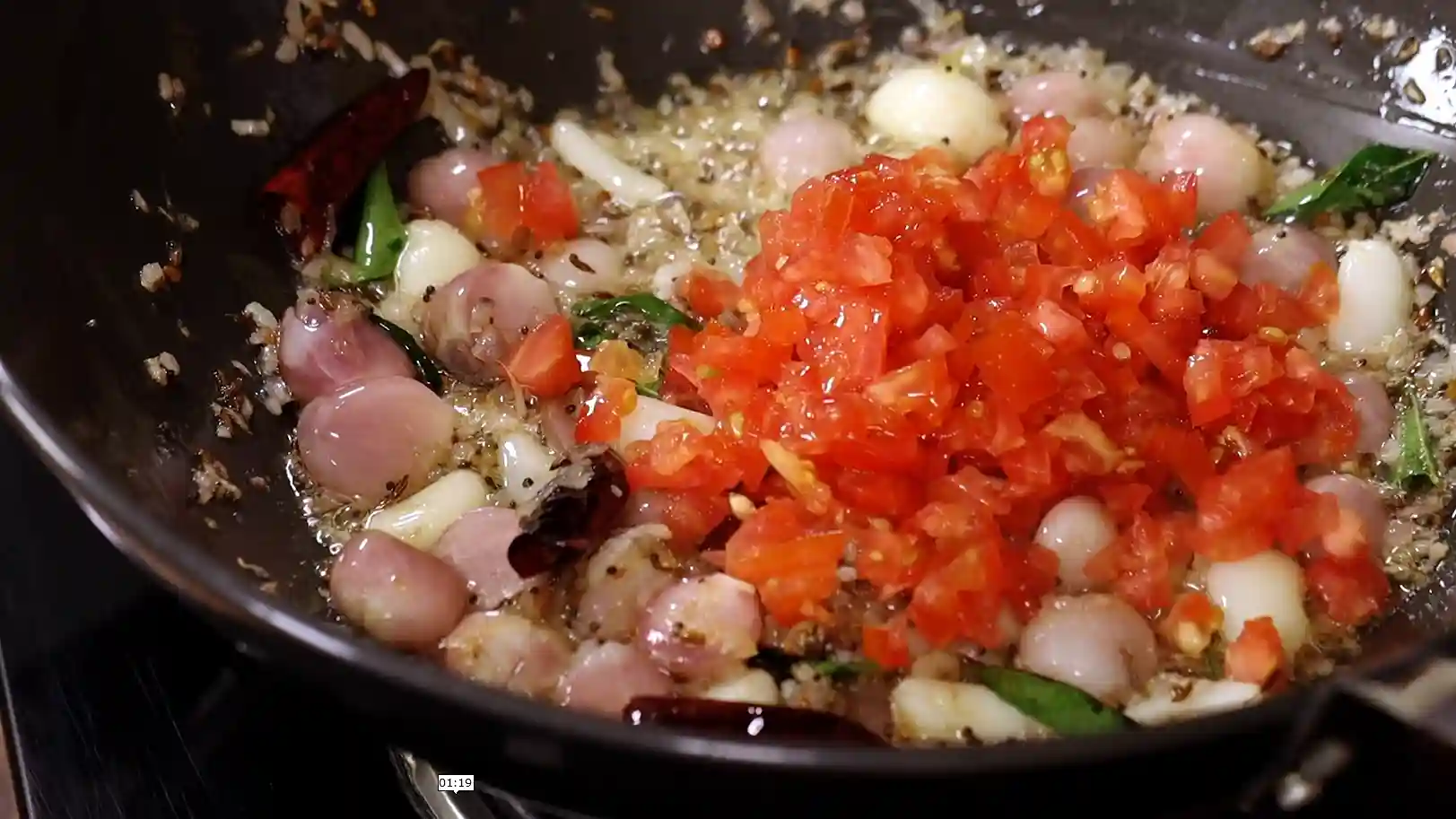
-
Add spice powders
Add salt, turmeric powder, chilli powder, coriander powder and sambar powder. Mix everything well.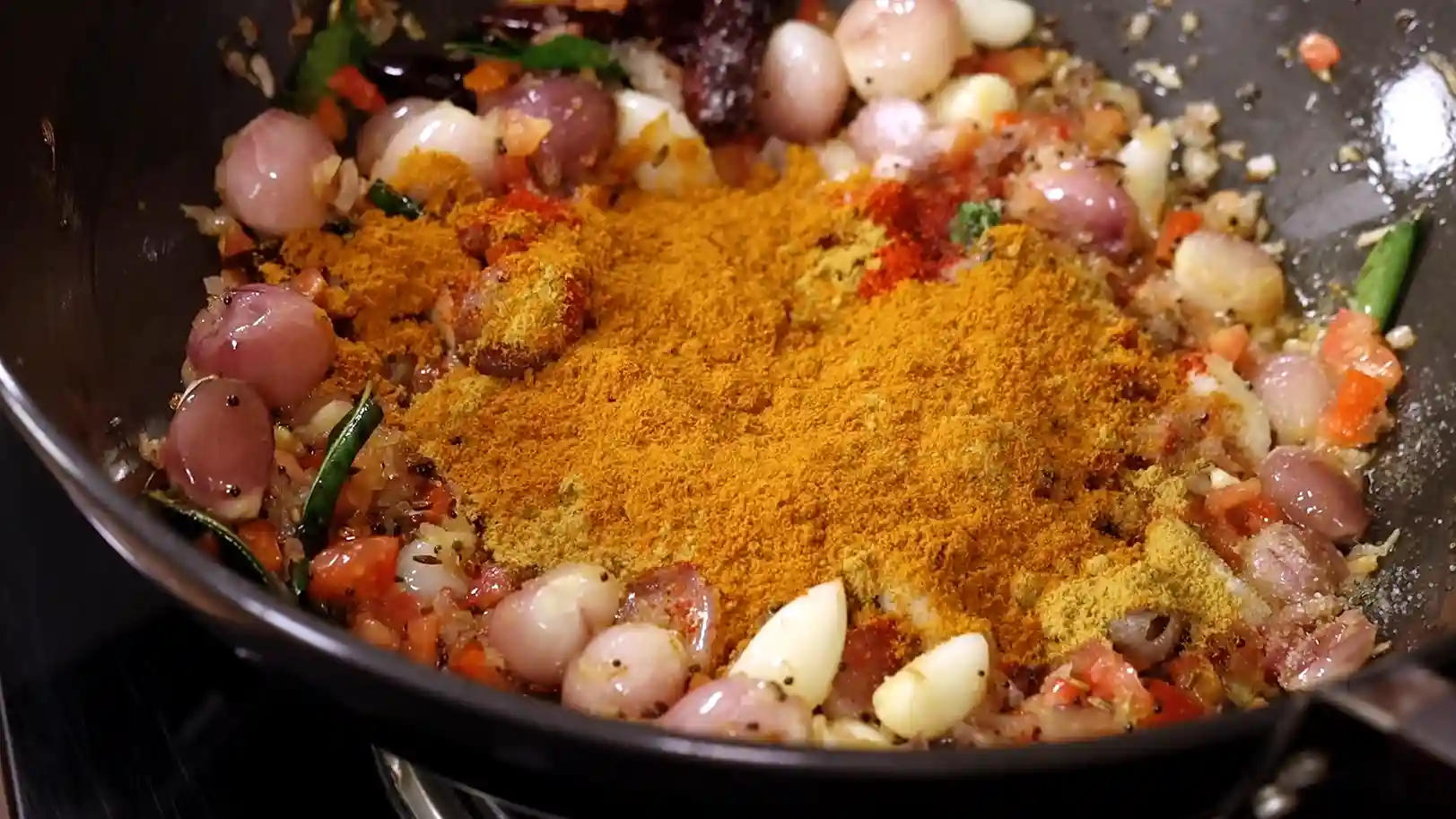
-
Simmer gravy
Add some water and cook until the oil separates from the masala. -
Add tamarind
Pour in the tamarind puree, mix well and cook for a few minutes.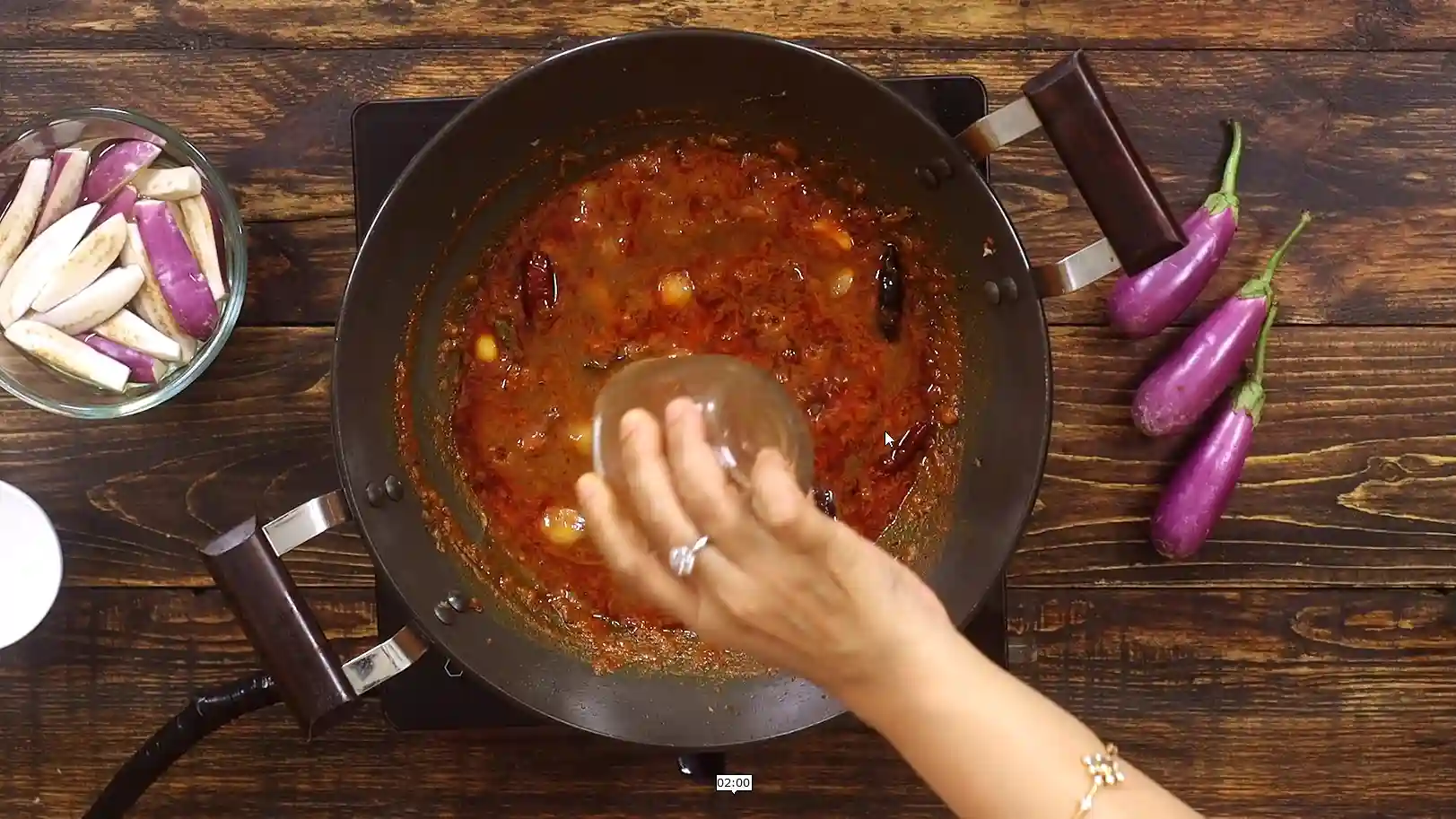
-
Cook brinjal
Add the remaining water and the brinjal pieces. Cover and cook on medium flame until the brinjals become tender.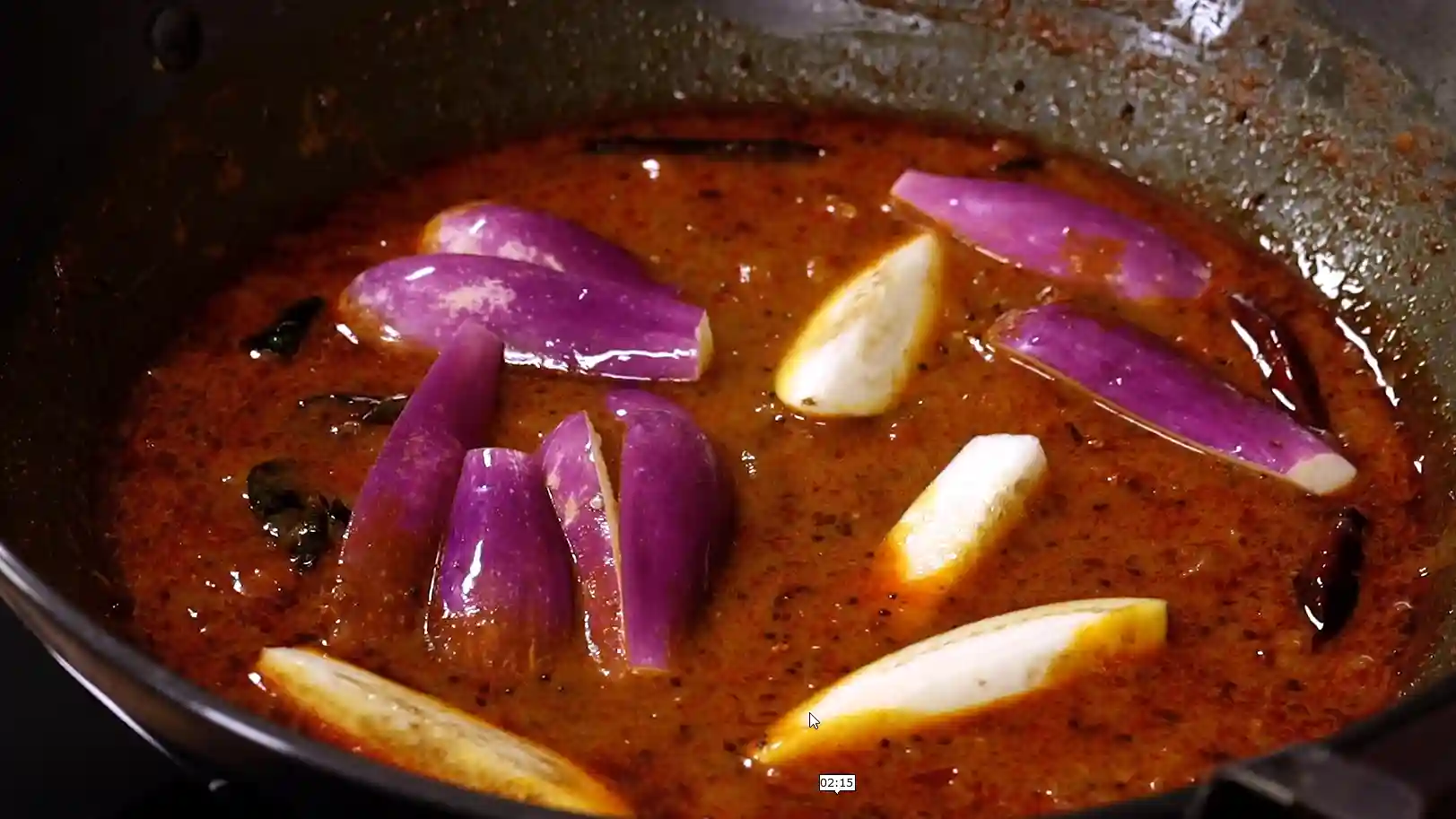
-
Balance flavours
Taste the curry, adjust the seasoning if needed and stir in the jaggery.
-
Finish curry
Add fresh curry leaves and cook briefly before turning off the heat.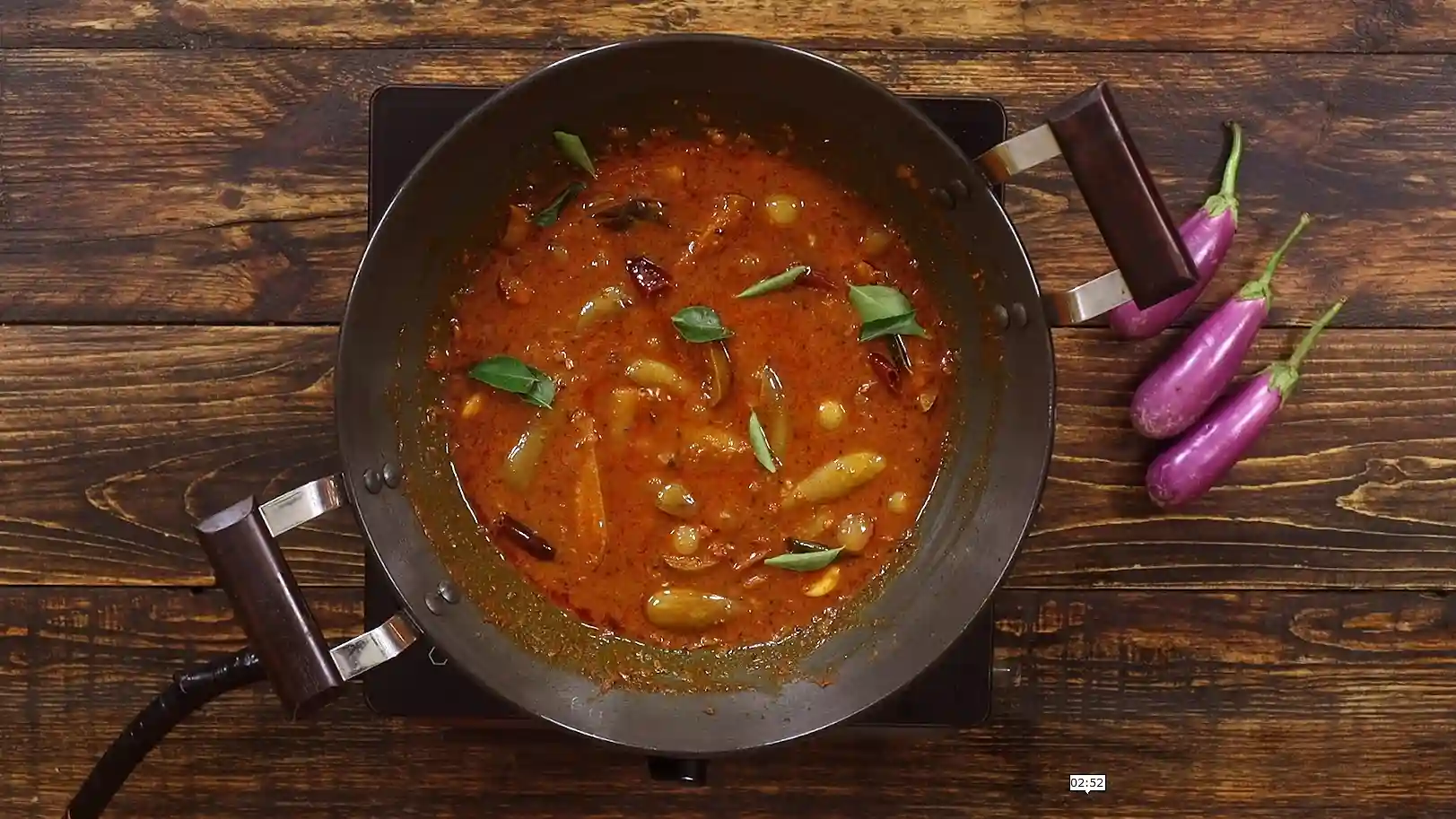
-
Serve
Serve the hot brinjal curry with steamed rice, dosa or chapati.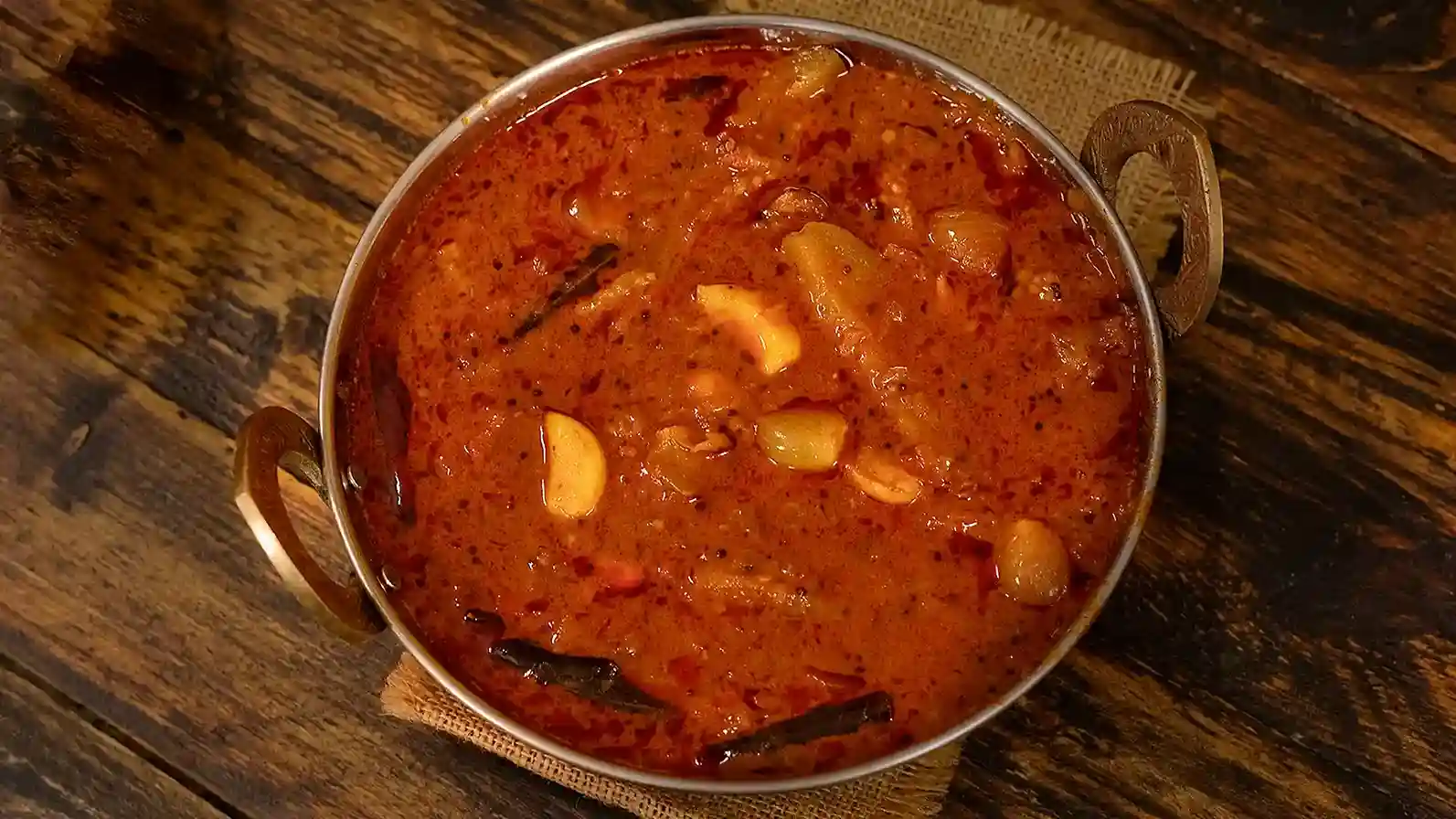
Equipment


Affiliate Disclosure: This post contains Amazon affiliate links, i.e., when you buy any product using the links below, we get commissions. but it doesn’t cost you anything extra. If you do purchase any product using the given links, we thank you in advance!
Nutrition Facts
Servings 5
- Amount Per Serving
- % Daily Value *
- Total Fat 5g8%
- Saturated Fat 0.8g4%
- Sodium 910mg38%
- Potassium 520mg15%
- Total Carbohydrate 22g8%
- Dietary Fiber 7g29%
- Sugars 11g
- Protein 3g6%
- Vitamin A 690 IU
- Vitamin C 18 mg
- Calcium 58 mg
- Iron 1.8 mg
- Vitamin E 1.2 IU
- Vitamin K 16 mcg
- Thiamin 0.08 mg
- Riboflavin 0.09 mg
- Niacin 1.3 mg
- Vitamin B6 0.28 mg
- Folate 34 mcg
- Phosphorus 62 mg
- Magnesium 35 mg
- Zinc 0.5 mg
- Copper 0.19 mg
- Manganese 0.34 mg
* Percent Daily Values are based on a 2,000 calorie diet. Your daily value may be higher or lower depending on your calorie needs.