Ever tasted that ultra-rich, melt-in-the-mouth sweet served in temples, so creamy, so ghee-laden, and just melts in your mouth?
That’s Akkaravadisal for you. It’s not just a dessert, it’s an experience. Made with rice, milk, jaggery, and lots of ghee, this traditional Iyengar delicacy is often prepared as a prasadam in temples.
If you love sakkarai pongal, this is its richer, more luxurious cousin.
Why Akkaravadisal Is So Special
This isn’t your everyday sweet dish. Akkaravadisal is deeply rooted in South Indian temple traditions, especially in Tamil Nadu.
What makes this recipe unique:
It’s cooked slowly in milk (not just water), making it incredibly creamy and rich.
Generous amounts of ghee and jaggery give it that signature silky texture and deep caramel-like sweetness.
A Quick Look at Its Origins
Akkaravadisal is famously associated with Srivilliputhur Andal Temple, where it is offered as prasadam.
Traditionally, it symbolizes abundance and devotion, made with the best ingredients like milk, ghee, and jaggery.
Ingredients Breakdown
- Rice: Forms the base of the dish. Short-grain rice works best for a soft, mushy texture.
- Milk: The key to richness. Cooking rice in milk gives Akkaravadisal its creamy consistency.
- Jaggery: Adds natural sweetness with a deep, earthy flavor compared to sugar.
- Ghee: Essential for aroma, richness, and that glossy finish.
- Cardamom: Adds a subtle, sweet fragrance.
- Cashew Nuts & Raisins: Provide crunch and balance the soft texture.
How the Akkaravadisal Comes Together
Start by cooking rice slowly in generous amounts of milk. Unlike regular pongal, here the rice is cooked until it becomes soft, almost mushy and creamy.
Meanwhile, melt jaggery with a little water and strain it to remove impurities.
Once the rice is fully cooked and creamy, add the jaggery syrup and mix well on low flame.
Pro Tip 💡: Always add jaggery after the rice is cooked. Adding it earlier can prevent the rice from softening properly.
Continue cooking while stirring until everything thickens and comes together into a luscious mixture.
Now comes the best part—add generous ghee in batches. This not only enhances flavor but also gives that glossy, rich finish.
Finish with cardamom powder and roasted cashews and raisins.
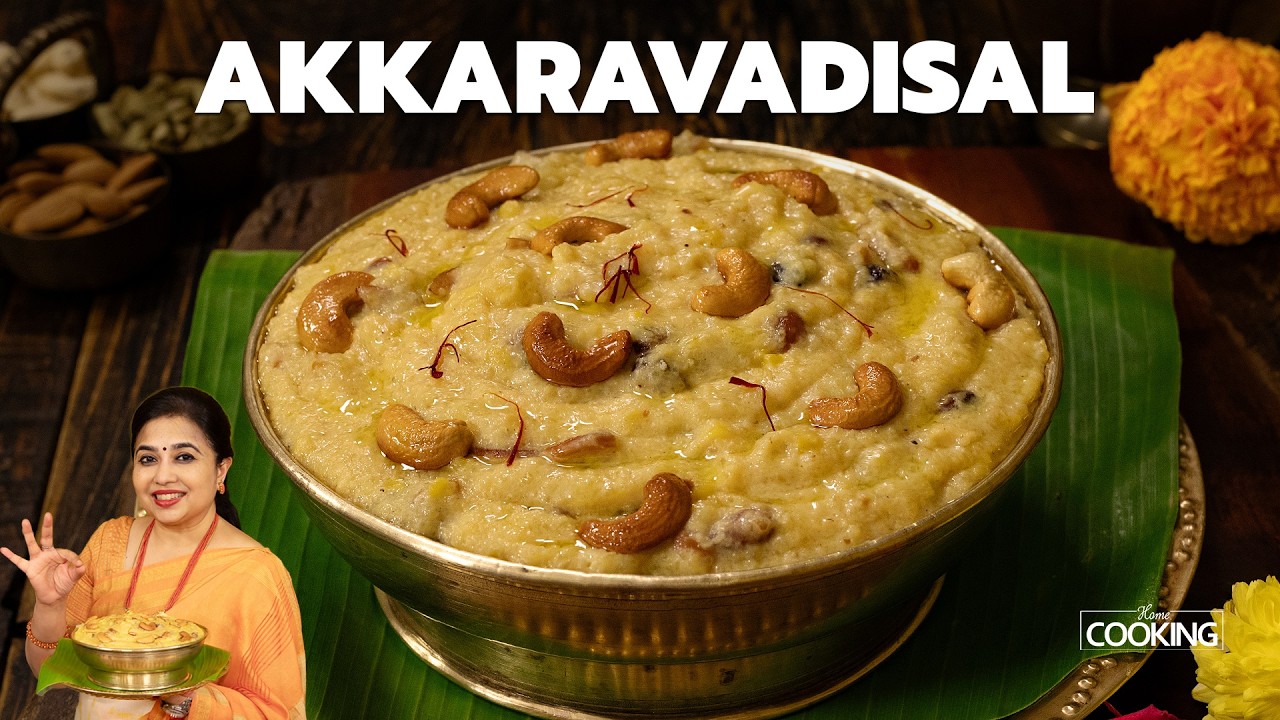
What you get is a rich, creamy, ghee-loaded dessert with deep jaggery flavor and a melt-in-the-mouth texture.
Problems This Recipe Solves
This recipe is perfect when:
- You want a traditional festive dessert
- You’re preparing prasadam at home
- You need a rich sweet for special occasions
- You want something more indulgent than regular sweet pongal
Diet-Friendly Tweaks
- Low-Ghee Version: Reduce the quantity of ghee, though it will slightly affect authenticity.
- Vegan Version 🌿: Replace milk with coconut milk and ghee with coconut oil or vegan butter.
- Low-Sugar Option: Reduce jaggery slightly and balance with more milk.
What Goes Along with Akkaravadisal
This dish is usually enjoyed on its own.
Traditional serving
Served warm as prasadam.
Festive pairing
Can be served alongside vadai or pongal during festivals.
How to Serve
Serve warm for the best taste and texture.
Drizzle a little extra ghee on top before serving for that authentic finish.
Packing & Bulk Preparation
Perfect for festivals and gatherings.
Tips:
Prepare in large batches and keep it slightly loose, as it thickens over time.
Common Pitfalls
- Hard Rice Texture: Happens if rice isn’t cooked fully in milk.
- Jaggery Crystallizing: Always strain melted jaggery before adding.
- Too Thick: Akkaravadisal thickens as it cools, adjust consistency with warm milk.
How to Store Akkaravadisal
Storage
Store in an airtight container in the refrigerator for up to 2 days.
How to Reheat
Best Method
Reheat on low flame with a splash of milk to restore creaminess.
Microwave
Heat in intervals, stirring in between.
Substitutions You Can Try
Sweeteners
Replace jaggery with palm jaggery for deeper flavor.
Flavor Variations
Add edible camphor (very small pinch) for temple-style authenticity.
Other Related Recipes You Might Like:-
- Chakkarai Pongal (Sweet Pongal) – classic festive sweet made with rice, jaggery, and ghee.
- Moong Dal Kheer (Paruppu Payasam) – rich payasam prepared with lentils and milk.
- Rice Kheer – creamy milk-based dessert loved across India.
- Makhana Kheer – luxurious kheer made with fox nuts and milk.
- Tender Coconut Payasam – refreshing coconut-based festive dessert.
- Palkova (Traditional Milk Sweet) – rich milk sweet made by slowly reducing milk.
- Rava Kesari – simple semolina sweet with ghee and sugar.
- Gulab Jamun (Soft & Juicy) – classic syrup-soaked Indian dessert.