Ever tasted sweet pongal at a temple and wondered why it feels so different from the one made at home?
It’s not just the ingredients.
It’s the slow cooking, the patience, and the way flavors are allowed to come together naturally.
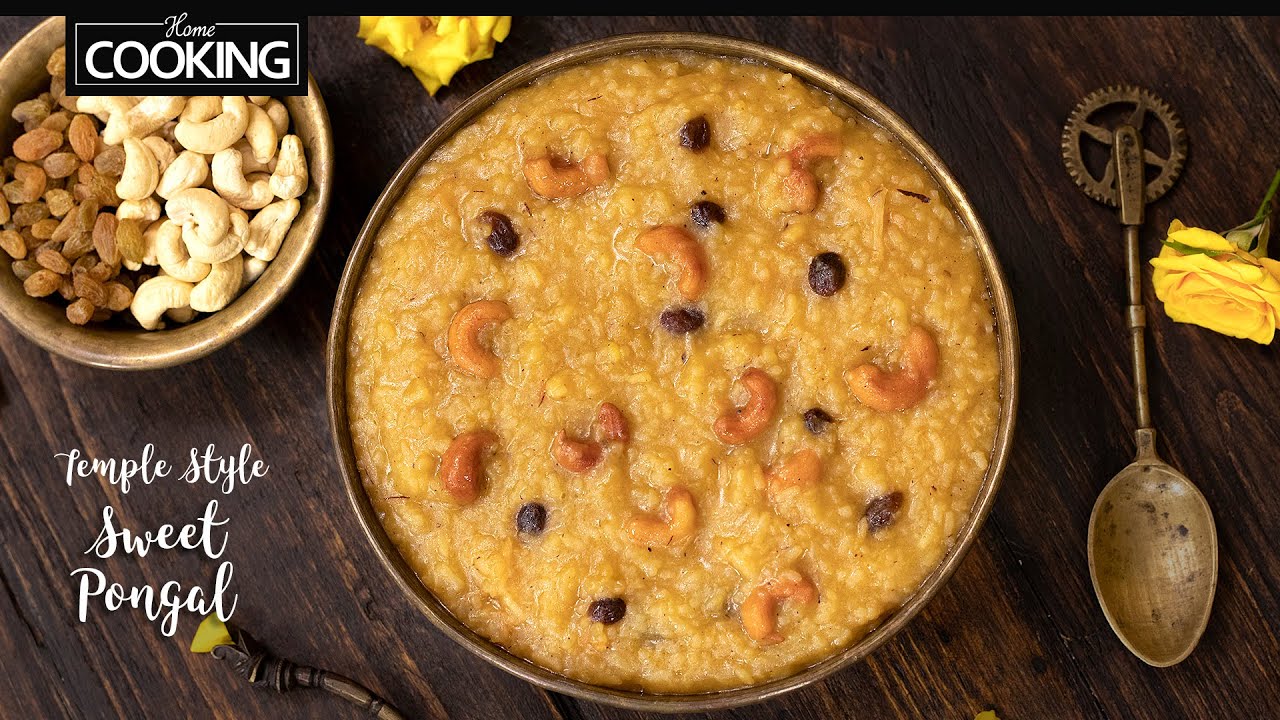
This temple-style sweet pongal is exactly that, soft, flowing, rich with ghee, gently sweet from jaggery, deeply comforting and no shortcuts. Just the kind of sakkarai pongal that fills the house with aroma and makes you slow down.
If you’re looking for a recipe that feels festive, grounding, and soulful, this is the one.
Why Temple Style Sweet Pongal Is Special
Temple pongal isn’t about perfection or speed. It’s about balance.
- The rice and moong dal are cooked until they almost melt together
- Jaggery’s sweetness is deep, not sharp
- Ghee is added in layers, not all at once
- Spices are subtle, never overpowering
That’s why temple pongal feels lighter, even though it’s rich. It’s meant to be offered, shared, and eaten slowly.
A Bit of Tradition Behind Sakkarai Pongal
Sakkarai pongal has deep roots in South Indian temples, especially in Tamil Nadu.
It’s traditionally prepared as prasadam during festivals like:
Because it’s offered to the deity, it’s always made using ingredients considered sattvic. The focus is on purity, patience, and intention, and you can taste that in every spoon.
Why This Recipe Works So Well at Home
This version stays true to the temple method but is still home-kitchen friendly.
It’s:
- One-pot style
- Beginner-friendly
- Perfect for festivals or special mornings
- Easy to scale for family or guests
Most importantly, it teaches you how sweet pongal should feel, not just how it should taste.
Ingredient Breakdown
- Raw rice and moong dal This combination gives pongal its signature softness. The dal adds richness and body, while the rice keeps it comforting and familiar.
- Jaggery Jaggery isn’t just a sweetener here. It adds depth, color, and that unmistakable temple aroma.
- Ghee Ghee is the backbone of sweet pongal. Added in stages, it builds flavor slowly instead of making the dish heavy.
- Dry coconut, cashews, and raisins These add texture and that prasadam-style bite you expect when eating temple pongal.
- Cardamom and cloves Just enough to perfume the dish without taking over.
How Temple Style Sweet Pongal Comes Together
You start by cooking the moong dal until it’s soft and yielding. This step matters; if the dal isn’t cooked well, the pongal won’t feel cohesive.
Then the soaked rice goes in, cooking along with the dal until everything blends into a soft, porridge-like base. At this point, ghee is mixed in gently, and the base is set aside to absorb those flavors.
Separately, nuts, raisins, and dry coconut are roasted in ghee until aromatic. Spices are added right at the end so they bloom without burning.
Jaggery is melted and cooked until smooth, then enriched with the roasted nut mixture. This jaggery blend is poured back into the cooked rice and dal, mixed patiently, and cooked just long enough for everything to come together.
The final texture should be soft, glossy, and slightly flowing, never dry.
Pro Tip💡: If the pongal thickens as it rests, don’t worry. That’s normal. Just add a splash of hot water and a little ghee while reheating.
Health & Diet Notes
While sweet pongal is a festive food, it also has its benefits:
- Jaggery provides minerals compared to refined sugar
- Moong dal adds protein and keeps it filling
- Ghee aids digestion when used mindfully
It’s best enjoyed in moderation, slowly, mindfully, and warm.
What to Serve With Sweet Pongal
Traditionally, temple sweet pongal is enjoyed on its own.
At home, you can pair it with:
Or serve it as a dessert after a South Indian meal.
How to Serve for Festivals or Pooja
- Serve hot or warm
- Use a wide bowl so it doesn’t look piled up
- Add a few roasted cashews on top for a prasadam feel
If serving for pooja, avoid tasting until offering; it keeps the ritual intact.
How to Store Sweet Pongal
How to store
- Refrigerate leftovers in an airtight container
- Best consumed within one day
How to reheat
- Add hot water and ghee
- Heat gently on a low flame
- Stir continuously to bring back softness
Common Mistakes to Avoid
- Cooking rice and dal separately
- Adding jaggery directly without dissolving
- Using too little ghee early and too much at the end
- Making the pongal too thick
Sweet pongal is forgiving, but patience makes all the difference.
Other Related Recipes You Might Like:
- Ven Pongal / Khara Bath – savory counterpart often served in temple-style meals.
- Rava Pongal – another comforting pongal variation using semolina.
- Idli Sambar – classic South Indian breakfast combo that pairs well in festive spreads.
- Temple Style Curd Rice – perfect to balance the sweetness of pongal.
- Coconut Chutney – light side dish commonly served with South Indian breakfasts.
- Sambar – traditional lentil curry included in festival menus.
- Wheat Halwa – popular festive sweet often made alongside sweet pongal.
- Rava Kesari – quick and easy sweet alternative for prasadam or celebrations.
Browse Breakfast Recipes by Category
- All Breakfast Recipes
- Dosa Recipes
- South Indian Breakfast Recipes
- Healthy Breakfast Recipes
- North Indian Breakfast Recipes
Temple Style Sweet Pongal
Description
Authentic temple‑style Sweet Pongal made with rice, moong dal, jaggery, and ghee. This traditional Sakkarai Pongal recipe by Hema Subramanian is no onion, no garlic, kid‑friendly, and perfect for Pongal festival and naivedyam offerings.
Ingredients
Prep Work
-
Wash and soak rice
Wash rice well and soak for a few minutes -
Prep jaggery
Break jaggery into small pieces for easy melting

-
Grate coconut
Grate dry coconut and keep ready
-
Keep nuts ready
Keep cashews and raisins ready for roasting
Method
-
Cook moong dal
Add moong dal to water in a pan and cook until soft

-
Add rice
Add soaked rice with water and cook until rice and dal are fully cooked

-
Add ghee
Mix ghee into the cooked rice dal mixture and keep aside
-
Roast nuts
Heat ghee and roast cashews, raisins, and dry coconut

-
Add spices
Add cardamom and cloves, mix and keep aside
-
Melt jaggery
Add jaggery to water and cook until fully dissolved
-
Combine nuts
Add roasted nuts mixture to the jaggery syrup

-
Mix pongal
Add jaggery mixture to cooked rice and mix well

-
Final cook
Cook briefly until everything comes together
-
Serve
Turn off heat and serve hot

Equipment


Affiliate Disclosure: This post contains Amazon affiliate links, i.e., when you buy any product using the links below, we get commissions. but it doesn’t cost you anything extra. If you do purchase any product using the given links, we thank you in advance!
Nutrition Facts
Servings 7
- Amount Per Serving
- Calories 420kcal
- % Daily Value *
- Total Fat 18g28%
- Saturated Fat 10g50%
- Cholesterol 40mg14%
- Sodium 45mg2%
- Potassium 210mg6%
- Total Carbohydrate 58g20%
- Dietary Fiber 3g12%
- Sugars 32g
- Protein 7g15%
- Calcium 80 mg
- Iron 2.5 mg
- Magnesium 45 mg
* Percent Daily Values are based on a 2,000 calorie diet. Your daily value may be higher or lower depending on your calorie needs.