Ever had pongal that feels a little… plain?
You know the kind: soft, filling, but missing that wow factor.
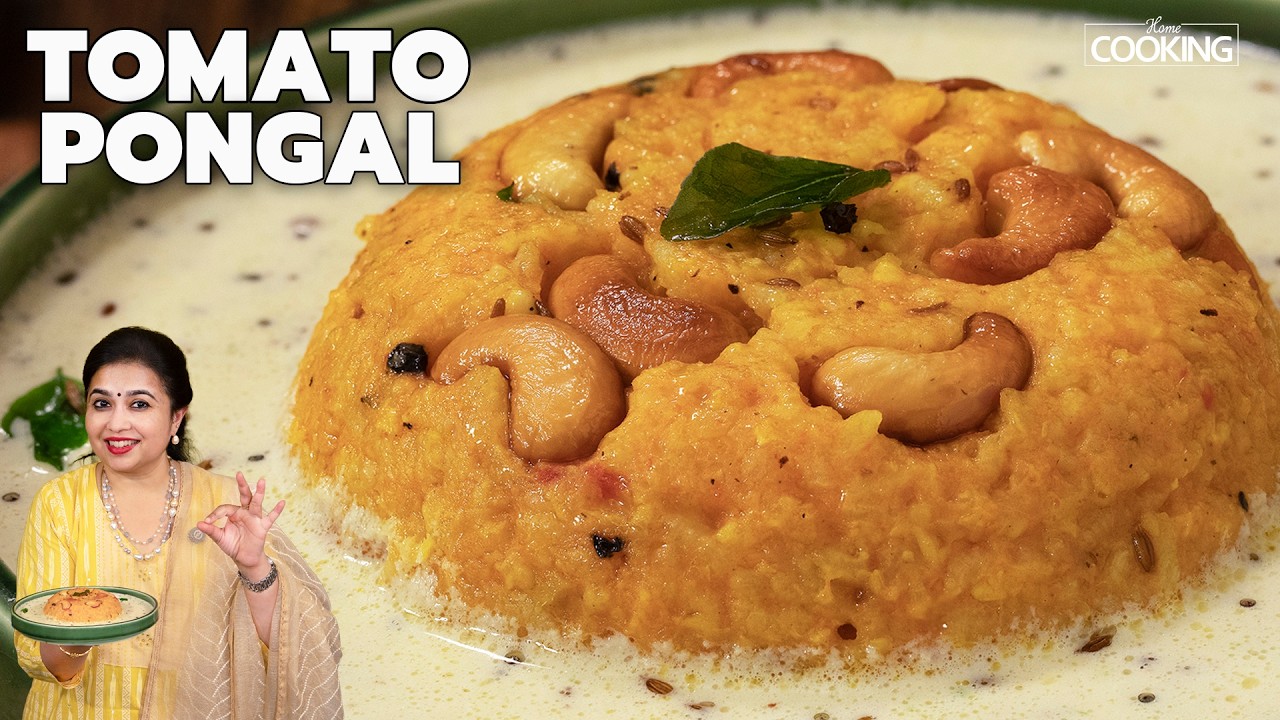
This Tomato Pongal fixes that instantly.
It’s creamy, slightly tangy, peppery, and loaded with ghee and roasted flavors. Think of it as your classic ven pongal… but upgraded with a rich tomato base that adds depth, color, and a subtle kick.
If you want a quick South Indian breakfast that actually excites your taste buds, this is it.
What is Tomato Pongal?
Tomato Pongal is a flavorful variation of traditional ven pongal, where:
- Rice and moong dal are cooked together
- Tomato puree replaces part of the water base
- Finished with a rich ghee tempering
The result?
A soft, melt-in-the-mouth dish with a gentle tang and bold aroma.
Why You’ll Love This Recipe
- Ready in under 30 minutes
- One-pot, pressure cooker friendly
- Comfort food with a flavor twist
- Easy to digest (thanks to moong dal)
- Perfect for breakfast, lunch, or light dinner
Ingredient Breakdown (Why Each One Matters)
Tomato Puree (The Game Changer)
- Adds tang + richness
- Gives pongal a beautiful color
- Balances the heaviness of rice and dal
Rice + Moong Dal
- Rice → softness and body
- Moong dal → creaminess + protein
Dry roasting dal enhances its aroma and flavor
Ghee
- Adds richness and that classic pongal taste
- Helps carry the spice flavors
Pepper + Cumin (Crushed)
- Pepper → heat and warmth
- Cumin → earthy depth
Ginger + Curry Leaves + Asafoetida
- Ginger → digestive and zesty
- Curry leaves → aroma
- Asafoetida → enhances overall flavor
Cashews
- Crunchy contrast to soft pongal
- Adds a touch of richness
How This Comes Together
Start by heating a little ghee in your pressure cooker.
Add the tomato puree and cook it patiently. At first, it will look watery, but as it cooks, it thickens and loses that raw smell.
That’s your cue to move forward.
Add salt and turmeric, and let the mixture simmer slightly until it deepens in color.
Now add your washed rice and roasted moong dal.
Stir everything well so the grains absorb that tomato base.
Pour in water, mix, and close the lid.
Let it cook for about 5 whistles, this is where the magic happens.
Once the pressure releases, open the cooker and give it a good mix. You’ll see a soft, slightly mushy texture, exactly what pongal should be.
Now comes the most exciting part, the tempering.
Heat ghee in a small pan and fry cashews until golden.
Add chopped ginger, crushed pepper-cumin, curry leaves, and a pinch of asafoetida.
The aroma at this stage? Absolutely irresistible.
Pour this sizzling tempering over the pongal.
Mix gently… and your Tomato Pongal is ready.
Vegan Swap🌿: Replace ghee with: Coconut oil, or neutral oil
What Makes This Recipe Special?
- A flavorful twist on classic pongal
- Balanced taste: tangy + spicy + creamy
- One-pot comfort food
- Perfect for busy mornings
Diet & Customization Options
Lighter Version
- Reduce ghee slightly
- Increase pepper for flavor without fat
Kid-Friendly Version
- Reduce pepper
- Add a few vegetables like carrots
What Goes Best With Tomato Pongal?
This dish shines with simple sides:
How to Serve
- Serve hot and fresh
- Add a drizzle of ghee on top (optional but recommended)
- Garnish with extra curry leaves
Packing & Meal Prep Tips
- Great for breakfast boxes
- Can be made in advance and reheated
- Stays soft if stored properly
How to Store Tomato Pongal
- Refrigerate in an airtight container for up to 2 days
- It will thicken as it cools
How to Reheat
- Add a little hot water
- Reheat on low flame while stirring
- Bring back to soft consistency
Substitutions You Can Try
- No moong dal? → Use only rice (texture will differ)
- No cashews? → Skip or use peanuts
- No ghee? → Use oil
Common Mistakes to Avoid
- Not cooking tomato puree enough (raw taste remains)
- Using less water (pongal becomes dry)
- Skipping roasting dal (loses aroma)
- Overcooking tempering spices (can turn bitter)
Other Related Recipes You Might Like:
- Milagu Pongal – classic savoury pongal made with rice, dal, and pepper.
- Coriander Pongal – flavourful variation with fresh coriander leaves.
- Rava Pongal – quick and easy pongal made using semolina.
- Sambar (Hotel Style) – classic side dish that pairs perfectly with pongal.
- Coconut Chutney – simple and creamy chutney for tiffin dishes.
- Peanut Coconut Chutney – rich chutney that complements pongal well.
- Medu Vada – crispy urad dal fritters often served with pongal combos.
Tomato Pongal
Description
Tomato Pongal by Hema Subramanian is a flavorful South Indian dish made with rice, dal, tomatoes, and aromatic spices. A spicy and comforting breakfast or tiffin option.
Ingredients
To make tomato pongal
For tempering
Instructions
Prep Work
-
Grind tomato
Grind tomatoes into smooth puree
-
Roast dal
Dry-roast moong dal until aromatic
-
Wash rice dal
Wash rice and dal and keep aside
-
Crush spices
Crush pepper and cumin coarsely -
Chop ginger
Finely chop ginger
Method
-
Cook tomato puree
Heat ghee in pressure cooker add tomato puree and cook until raw smell goes
-
Add spices
Add salt and turmeric mix well and cook until slightly thick
-
Add rice dal
Add washed rice and dal and mix well
-
Add water
Pour water and mix everything well
-
Pressure cook
Close the cooker and cook on medium flame for 5 whistles -
Prepare tempering
Heat ghee, add cashews and fry until golden
-
Add aromatics
Add ginger, crushed pepper cumin curry leaves and asafoetida and sauté
-
Open cooker
Once the pressure releases open and mix pongal -
Add tempering
Pour tempering over pongal and mix well
-
Serve
Serve hot with chutney or sambar
Equipment

Affiliate Disclosure: This post contains Amazon affiliate links, i.e., when you buy any product using the links below, we get commissions. but it doesn’t cost you anything extra. If you do purchase any product using the given links, we thank you in advance!
Nutrition Facts
Servings 4
- Amount Per Serving
- % Daily Value *
- Total Fat 10g16%
- Saturated Fat 5g25%
- Cholesterol 20mg7%
- Sodium 300mg13%
- Potassium 260mg8%
- Total Carbohydrate 36g12%
- Dietary Fiber 4g16%
- Sugars 3g
- Protein 8g16%
- Calcium 40 mg
- Iron 2 mg
- Magnesium 45 mg
* Percent Daily Values are based on a 2,000 calorie diet. Your daily value may be higher or lower depending on your calorie needs.